
Learnin' Sturgeon
Every spoonful of caviar begins with a fish, and sturgeon are some of the oldest fish there are.
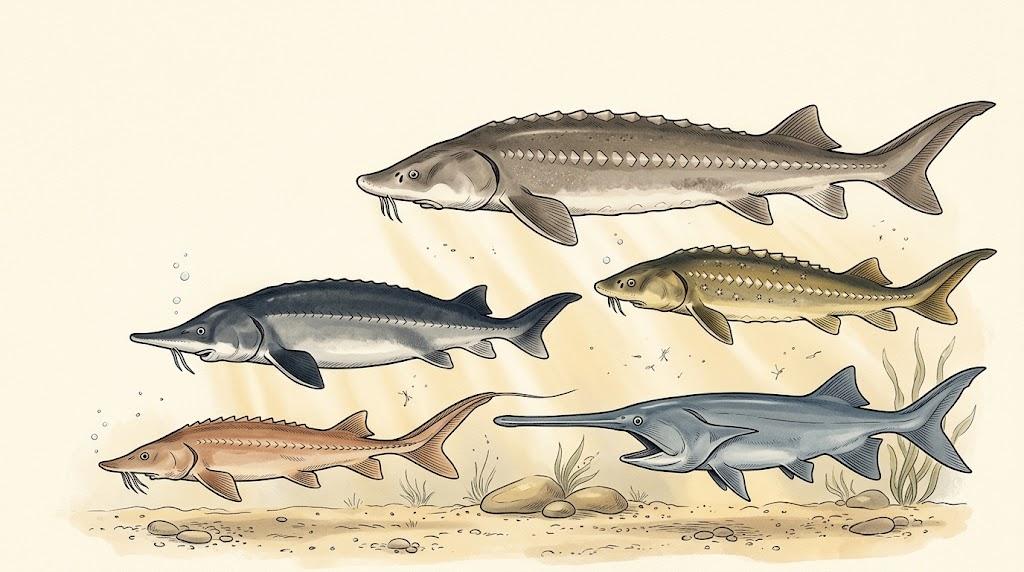
Sturgeon & paddlefish
Vintage field-guide illustrations of the fish behind our caviar.
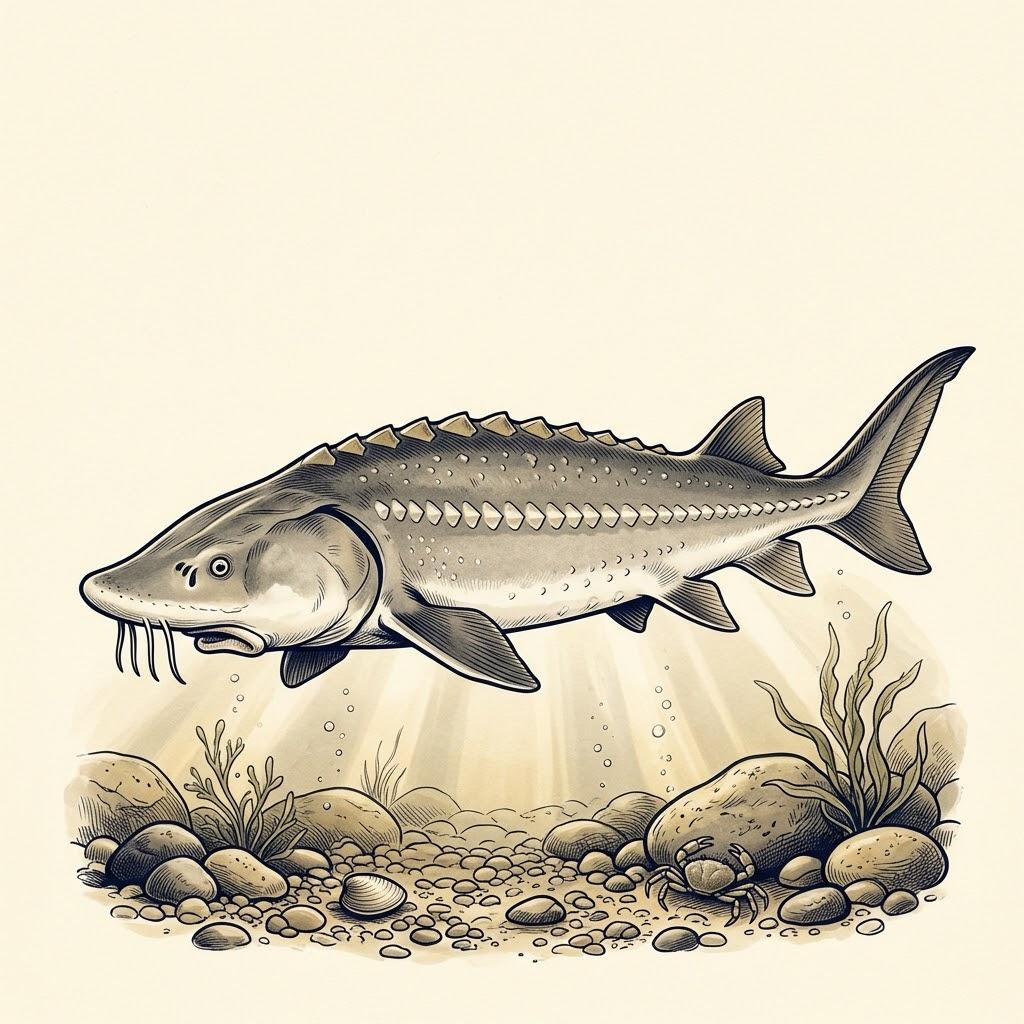
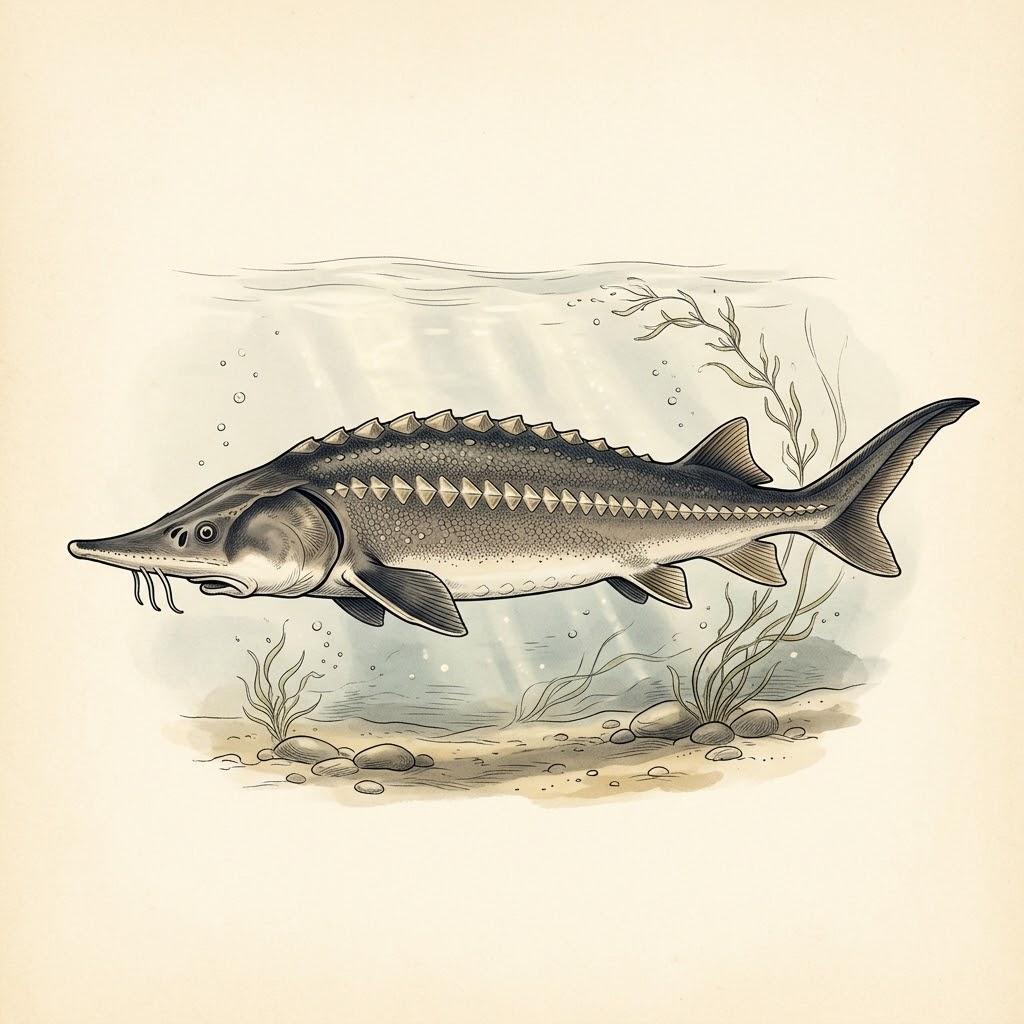
White sturgeon
North America's largest freshwater fish, native to the Pacific coast.
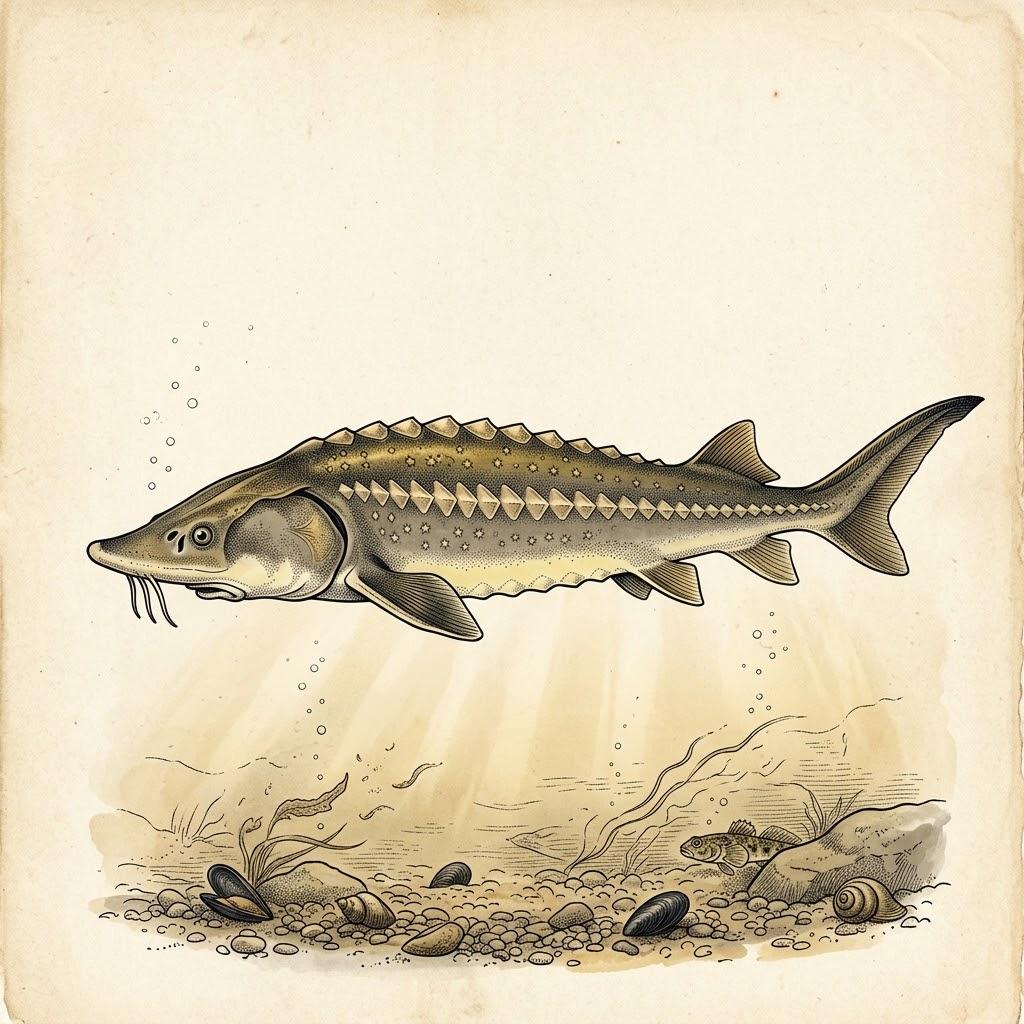
Russian sturgeon
The fish of Osetra, native to the Caspian, Black and Azov seas.
Beluga × sterlet hybrid
A cross of the giant beluga and the small sterlet.
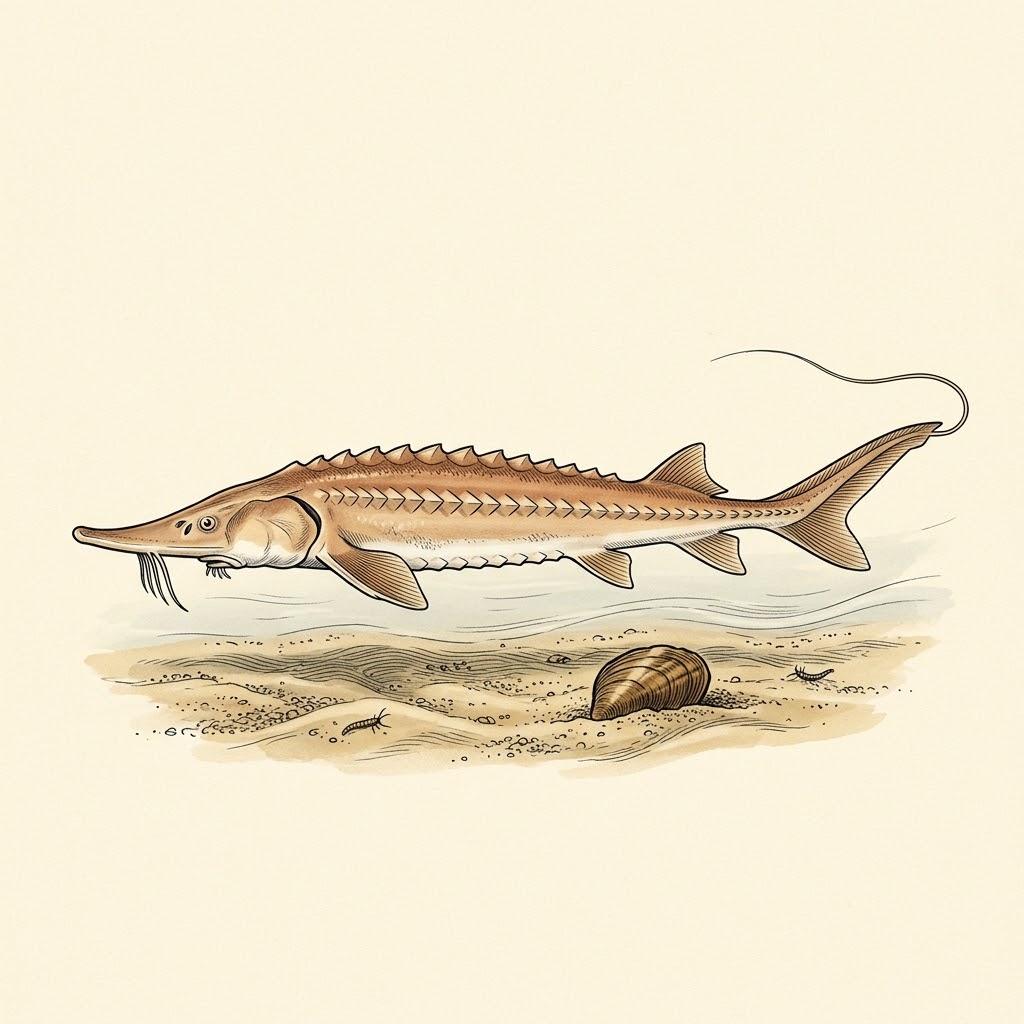
Shovelnose sturgeon
The hackleback, the smallest sturgeon in North America.
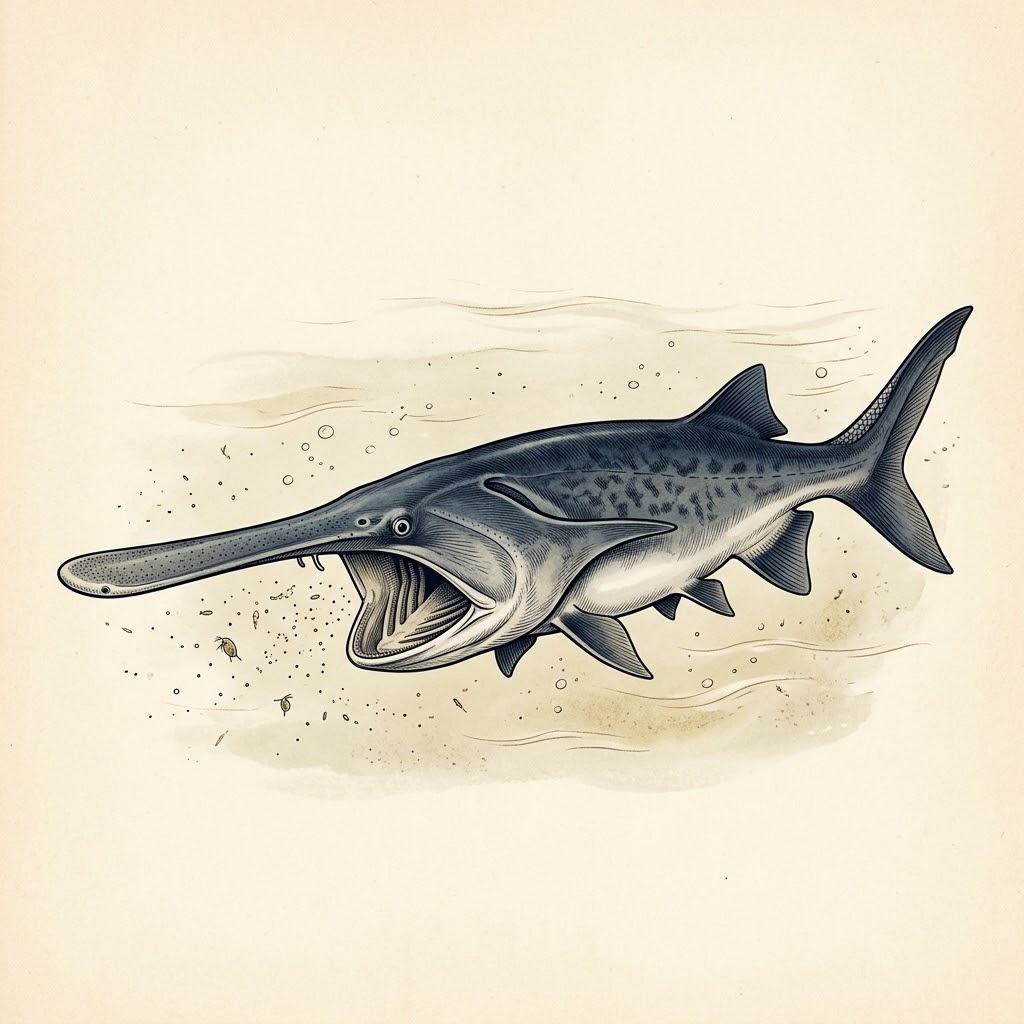
Paddlefish
A close cousin of the sturgeon, though not a true sturgeon.
The sturgeon family is counted among the most primitive of all bony fish. Its story goes back to the Cretaceous period, more than 120 million years ago, and its ancestors are believed to have lived alongside the dinosaurs. Sturgeon and their cousins the paddlefish make up a small order of about 27 species, all of them found in the Northern Hemisphere.
You would know one on sight. In place of ordinary scales, a sturgeon wears five rows of bony plates called scutes. Four whisker-like barbels hang beneath its snout, feeling along the river bottom for food, and it has no teeth at all. It simply draws its food in, like a vacuum. Salted, its roe has long been known as caviar.
Below, you'll find a page for each fish behind the caviar we carry. If you scanned the label on your jar or tin, you're in the right place.
The fish behind our caviar
- White sturgeon: North America's largest freshwater fish, native to the Pacific coast.
- Russian sturgeon: the fish of Osetra, native to the Caspian, Black and Azov seas.
- Beluga × sterlet hybrid: a cross of the giant beluga and the small sterlet.
- Shovelnose sturgeon: the hackleback, the smallest sturgeon in North America.
- Paddlefish: a close cousin of the sturgeon, though not a true sturgeon.
A short note on our roes: the smoked salmon, smoked whitefish and trout roes we carry come from other fish entirely, not from the sturgeon family.
How wild sturgeon are protected today
Wild sturgeon have been fished for their meat and roe for centuries, and many populations have fallen sharply. Dams that block their migrations, poaching and the loss of river habitat all add to the pressure.
- International trade. Since April 1, 1998, every species of sturgeon and paddlefish has been listed under CITES, the international treaty that regulates trade in wildlife. Caviar crossing borders must meet its rules.
- Global status. In 2022, the International Union for Conservation of Nature (IUCN) reassessed the group and found all 26 remaining sturgeon species at risk of extinction, 17 of them critically endangered. The same review confirmed that the Chinese paddlefish is extinct.
Each species page gives that fish's own status.
When you're ready to taste the difference between them, our caviars are waiting.