
Russian Sturgeon
At a glance
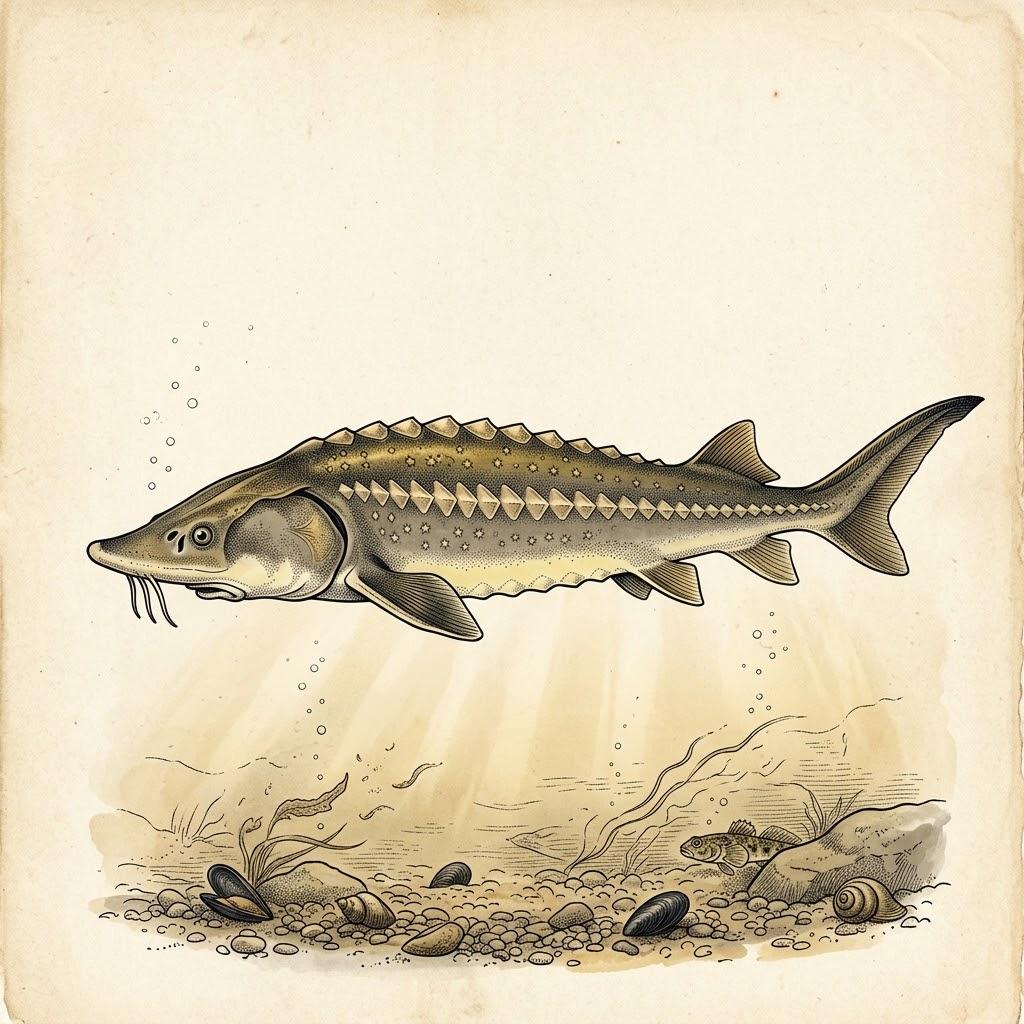
- Name: Russian sturgeon, Acipenser gueldenstaedtii, also called Danube sturgeon
- Native to: the Caspian, Black and Azov seas and the great rivers that feed them
- Remember it by: its roe is the caviar known as Osetra
- Our caviar from this fish: German Osetra
The story
For centuries, the Russian sturgeon made its way from the Black, Azov and Caspian seas up their great rivers to spawn. In the Danube it once traveled as far as Bratislava, and now and then as far as Vienna.
Its Latin name honors Johann Anton Güldenstädt, an eighteenth-century naturalist and explorer who worked on behalf of Catherine the Great. It is one of the largest sturgeon of the Danube, known to grow beyond 6½ feet (2 meters) and live more than 30 years. Females take 12 to 16 years to mature.
In the caviar trade, the roe of this species is known as Osetra.
Status in the wild
The IUCN lists the Russian sturgeon as Critically Endangered. In the Danube today, it is found only below the Iron Gate dams, and very few fish have been recorded coming in from the sea to spawn in recent years.
From this fish
Our German Osetra comes from Russian sturgeon farm-raised in Germany.
An old name for an old fish. Discover our German Osetra.