
Beluga × Sterlet Hybrid
At a glance
- Name: beluga × sterlet hybrid, Huso huso × Acipenser ruthenus, known in the trade as “bester”
- The parents are native to: the Caspian, Black and Azov seas and their rivers (beluga), and the rivers of Eastern Europe and Russia (sterlet)
- Remember it by: it pairs the largest sturgeon with one of the smallest
- Our caviar from this fish: Romanian Beluga Hybrid
The story
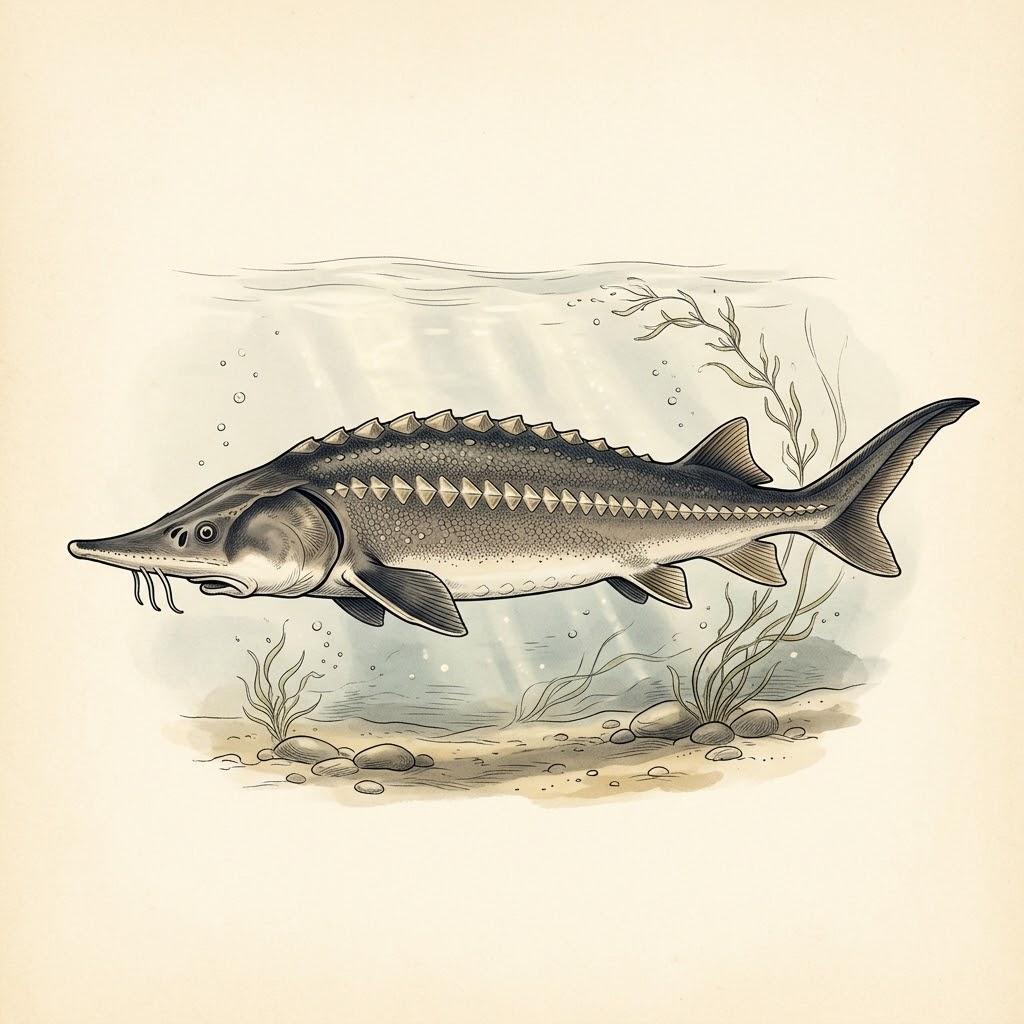
This fish is a cross of two very different parents. Our caviar comes from a female beluga crossed with a male sterlet.
The beluga (Huso huso) is the giant of the family, often called the largest freshwater fish in the world. Fish up to about 20 feet (6 meters) long have been documented, and the oldest have lived more than a hundred years. It spends its adult life in the Black, Azov, Caspian and Adriatic seas and returns to the rivers to spawn. Unlike its bottom-feeding cousins, it is a true hunter that feeds on other fish. The beluga is listed as Critically Endangered.
The sterlet (Acipenser ruthenus) is small and stays in fresh water. It lives in rivers that flow into the Caspian, Black, Azov, Baltic, White, Barents and Kara seas. In the Danube, it is the smallest and shortest-lived of the sturgeon, reaching about 4 feet (1.25 meters) and 24 years. Its Latin name comes from Ruthenia, the medieval Latin name for Russia. The sterlet is listed as Endangered.
Soviet fisheries scientists took up the cross in the mid-twentieth century and found it the most promising of the sturgeon hybrids they studied. It brought together the beluga's fast growth and the sterlet's early maturity.
From this fish
Our Romanian Beluga Hybrid is farm-raised in Romania.
For an evening that calls for something rare, try our Romanian Beluga Hybrid.