
Paddlefish
At a glance
- Name: American paddlefish, Polyodon spathula, also called spoonbill
- Native to: the Mississippi River basin, from New York to Montana and south to Louisiana
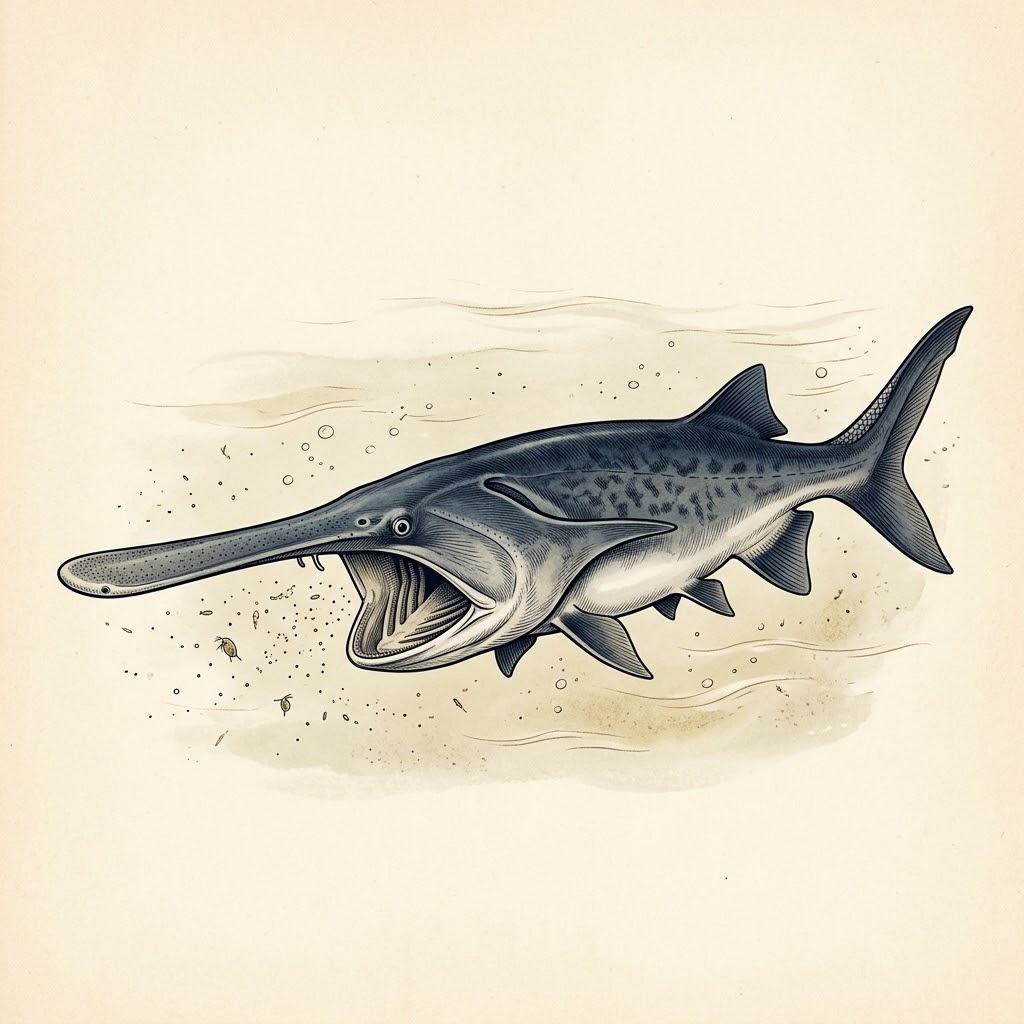
- Remember it by: a long, paddle-shaped snout that senses its food
- Our caviar from this fish: Paddlefish
The story
First, an honest word: the paddlefish is not a true sturgeon. It belongs to its own family, the paddlefishes, within the same order as the sturgeons. Think of it as a close cousin.
It is unlike anything else in North American rivers. Its paddle-shaped snout, called a rostrum, can be up to a third of its body length. The rostrum is covered in sensors that pick up the faint electrical signals given off by tiny plankton, so the paddlefish can find its food in murky water. It feeds by swimming slowly with its huge mouth open, straining plankton from the water.
It grows to about 7 feet and nearly 200 pounds, and some are reported to have lived 50 years or more. Its range runs through the Mississippi River basin, from southwestern New York to central Montana and south to Louisiana, along with Gulf Coast rivers from Alabama to Texas.
It is also the last of its kind. Its only living relative, the Chinese paddlefish, was declared extinct in 2022.
Status in the wild
The IUCN lists the American paddlefish as Vulnerable. Like the sturgeons, it is covered by CITES trade rules.
From this fish
Our Paddlefish caviar comes from American paddlefish from the United States.
An easy, welcoming first caviar. Try our Paddlefish.